Experience
Sewage Decontamination & Sanitization in Akron
Sewage backups and contaminated areas pose immediate health risks and property damage concerns. If you need Sewage Decontamination & Sanitization in Akron, OH, a trained response stabilizes the environment, removes contaminated materials, and reduces the risk of pathogen exposure. This service addresses raw sewage (blackwater), sewage-laden wastewater, and the contaminated surfaces and materials that carry bacteria, viruses, and organic waste.
Sewage Decontamination & Sanitization provides practical value by restoring a safe indoor environment, limiting structural damage, and documenting the work needed for insurance or regulatory purposes. Emergency Sewage Cleanup, Sanitation and Decontamination Services focus on rapid response, containment, safe waste removal, and finishing steps that make a space safe for occupancy again. Acting quickly limits cross-contamination, microbial growth, and long-term odors.
What is Sewage Decontamination & Sanitization?
Sewage Decontamination & Sanitization is the professional removal, cleaning, and disinfection of areas exposed to sewage or sewage-contaminated water. The process addresses the removal of solids and liquids, decontamination of surfaces, and sanitization to reduce pathogen levels to a safe baseline. It often includes containment, controlled waste transport, and documentation to meet disposal and occupational-safety expectations.
The service treats different categories of water contamination, including raw sewage (blackwater) and sewage-contaminated graywater that contains fecal matter or other biological hazards. Professionals assess materials such as porous flooring, insulation, and drywall to determine what can be cleaned and what must be removed. The goal is to return the property to an environment where the risk of infection and ongoing microbial growth is minimized.
What does Sewage Decontamination & Sanitization include?
A complete Sewage Decontamination & Sanitization service typically includes inspection, containment, removal of bulk sewage, cleaning of affected surfaces, disinfection with EPA-registered agents, drying and moisture control, and waste disposal. Technicians perform targeted cleaning of plumbing fixtures, drains, and surrounding surfaces, and they remove porous materials that cannot be reliably decontaminated. They also test moisture levels and visually inspect for residual contamination and odors.
Emergency Sewage Cleanup, Sanitation and Decontamination Services often add rapid-response measures such as temporary containment, negative air pressure, and HEPA-filtered filtration to limit spread to unaffected areas. Documentation is provided for insurance claims and may include photographs, work logs, and post-service moisture readings. The line between cleanup and reconstruction is clear: cleanup and sanitization prepare the space, while reconstruction repairs or replaces structural materials removed during remediation.
Who needs Sewage Decontamination & Sanitization?
Anyone with exposure to raw sewage, sanitary sewer overflow, a clogged or backed-up sewer line, or sewage-contaminated flooding should consider professional Sewage Decontamination & Sanitization. Property owners, tenants, landlords, facilities managers, and businesses that experience sewage events benefit from professional services to manage health risk and property damage. Commercial properties and multi-unit dwellings have additional risk of cross-contamination to shared systems and adjacent units.
Individuals who discover sewage in living spaces, mechanical rooms, basements, or HVAC intakes should avoid unprotected cleanups and contact professionals. Non-professional attempts to clean blackwater can spread contamination, create aerosols, and leave hidden moisture that supports mold growth. Professionals bring training, containment strategies, and the right equipment to reduce those risks.
When should you schedule Sewage Decontamination & Sanitization in Akron, OH?
Schedule Sewage Decontamination & Sanitization immediately after any direct sewage exposure or sewage backup affecting living or working spaces. Prompt action reduces pathogen survival, slows microbial growth, and limits material degradation. If sewage has soaked porous materials or migrated under floors or into wall cavities, delay increases the likelihood of material removal and reconstruction.
Emergency Sewage Cleanup is appropriate when contamination threatens occupant health, when wastewater enters HVAC systems, or when sewage exits plumbing fixtures under pressure. For non-urgent but confirmed contamination, arrange a professional assessment as soon as practical because property conditions affect the scope, timeline, and cost.
How does the Sewage Decontamination & Sanitization process work?
The Sewage Decontamination & Sanitization process follows a clear sequence that professionals adapt to site conditions:
- Initial contact and safety triage—the provider confirms basic details, arrival window, and preliminary hazards.
- On-site assessment—technicians inspect contamination extent, identify hazards (electrical, structural, chemical), and define containment and removal scope.
- Scope identification and estimate—professionals outline what will be cleaned, removed, and tested, and they describe timing and follow-up needs.
- Preparation and containment—workers isolate affected areas using barriers, negative air machines, and traffic control to prevent cross-contamination.
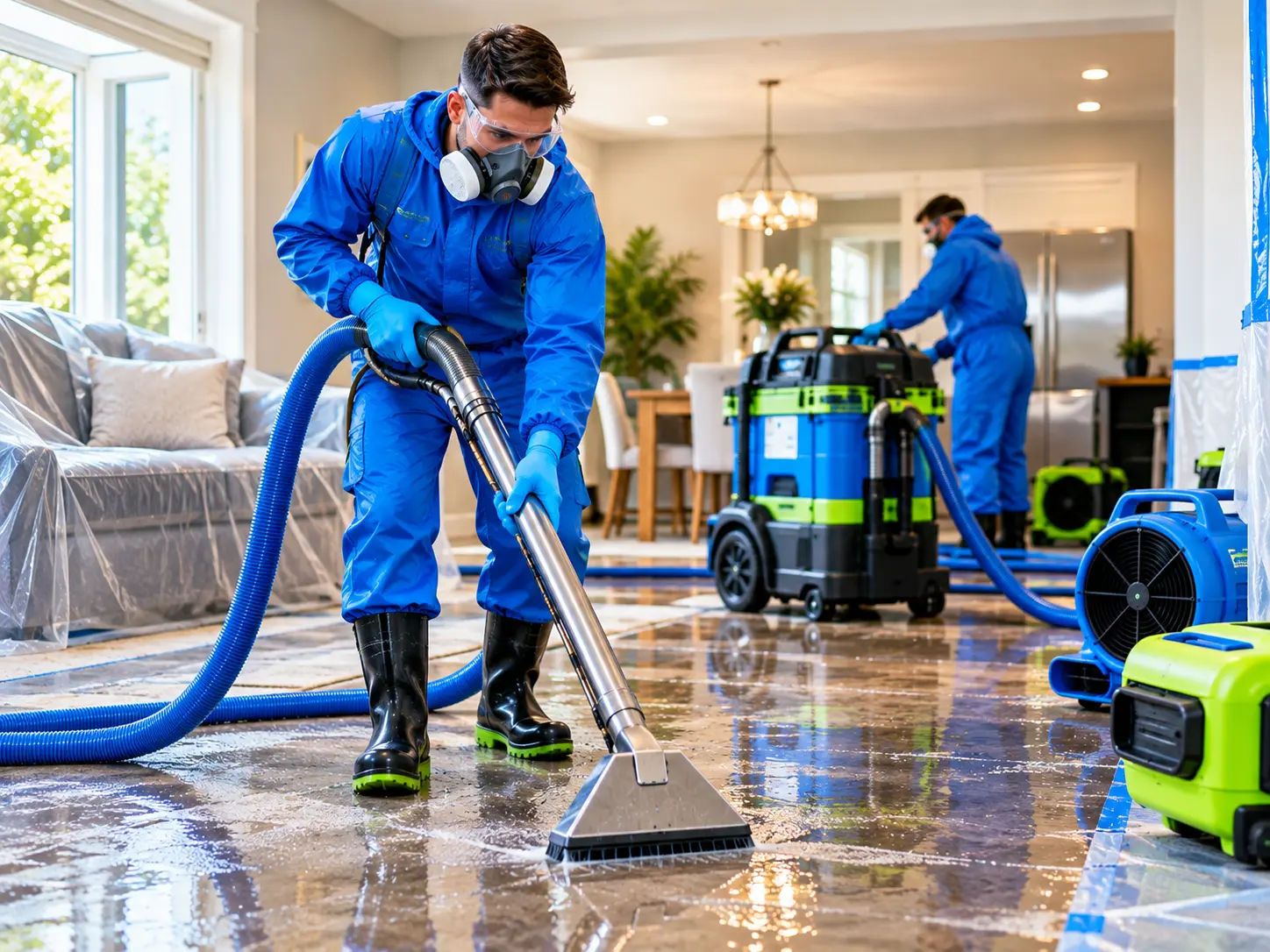
- Service execution—bulk sewage removal, material disposal, surface cleaning, and disinfection occur under controlled conditions.
- Inspection and post-clean checks—technicians measure moisture, verify disinfection, and document results.
- Completion and guidance—customers receive documentation, re-entry guidance, and recommended next steps such as repairs or mold remediation.
Each step relates directly to property conditions. For example, saturated drywall often requires removal, whereas sealed concrete can sometimes be cleaned and sanitized in place.
What factors affect Sewage Decontamination & Sanitization?
Several factors influence the scope and complexity of Sewage Decontamination & Sanitization. Contamination category (raw sewage versus graywater), the area of exposure, the porosity of affected materials, and time since exposure all change what is required. Access issues such as confined spaces, crawlspaces, or multi-story logistics increase labor and equipment needs.
Environmental conditions such as ambient humidity and temperature affect drying times and microbial growth. Building systems—HVAC, plumbing layout, and areas of concealed cavities—determine whether contamination has migrated beyond visible surfaces. Regulatory and disposal requirements, as well as customer insurance needs, also shape documentation and waste handling.
What should you expect from Sewage Decontamination & Sanitization in Akron, OH?
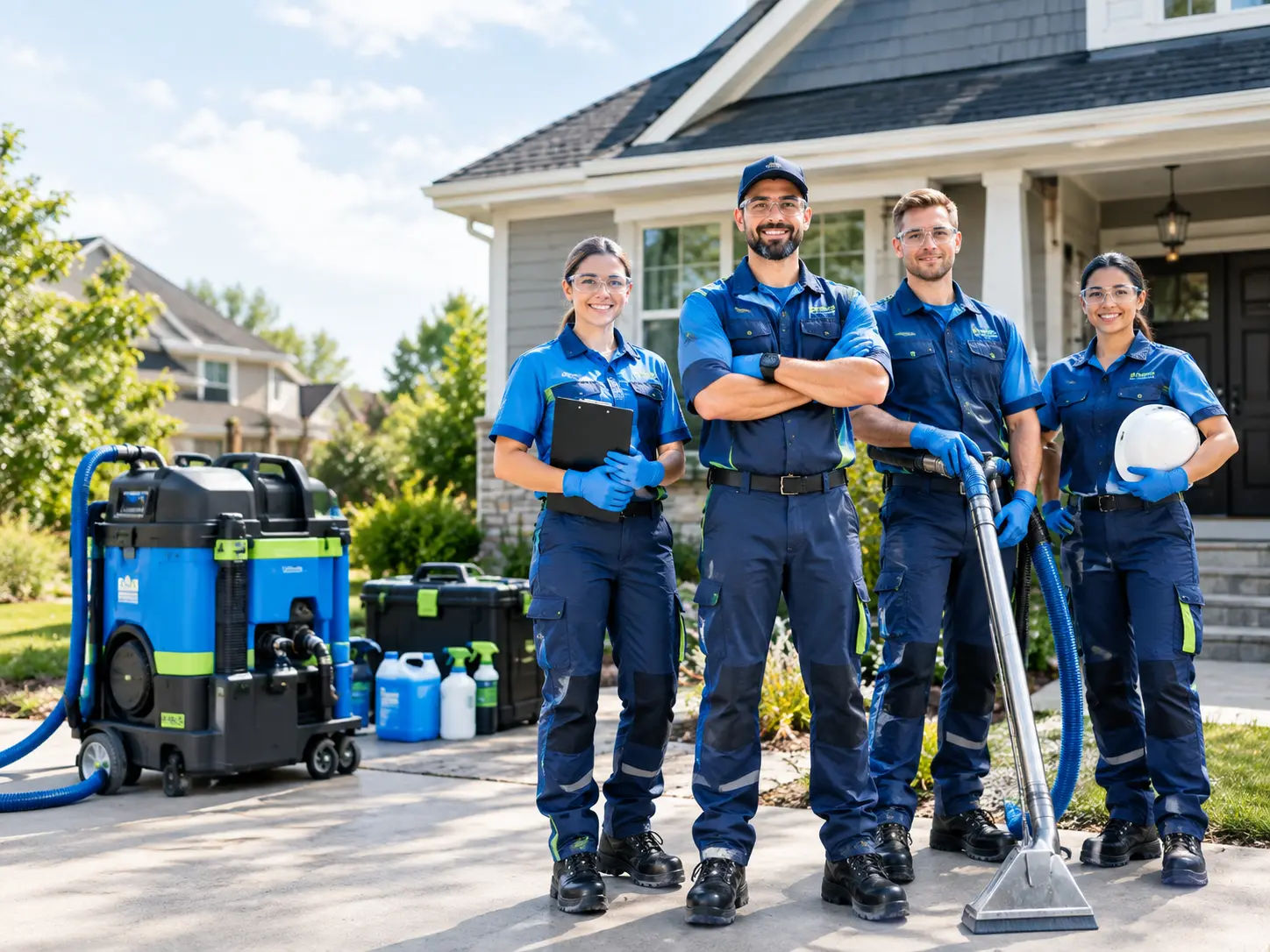
Expect trained technicians to arrive with PPE, containment materials, extraction equipment, and disinfectants appropriate for sewage hazards. They will assess risks, explain the planned work, and identify materials that cannot be salvaged. Technicians should use moisture meters and thermal imaging as needed to find hidden wet pockets.
You should receive clear communication about the estimated timeline, the need for any demolition, and next steps for reconstruction if porous materials are removed. Expect a written scope, photographs, and a work log you can use with your insurance adjuster. After work is complete, professionals often provide recommendations for repairs, moisture control, and follow-up checks.
What preparation may be required before technicians arrive?
Before technicians arrive, secure the area and limit access to people and pets to reduce cross-contamination. Turn off HVAC systems if instructed, and avoid walking through contaminated areas to limit tracking. If safe and possible, remove valuables from adjacent unaffected rooms and inform technicians of any sensitive areas such as medical equipment or electrical panels.
Provide service providers with access information, permit requirements, and any known history of plumbing or sewer problems. If you have insurance information or a claim in progress, have the policy or claim reference available so documentation can be prepared immediately. Professionals will advise specific preparations during initial contact.
What equipment and materials are commonly used?
Common equipment includes high-capacity wet/dry vacuums and pumps for bulk sewage removal, industrial-grade extractors for surface water removal, and negative air machines with HEPA filtration for air cleaning. Technicians use moisture meters, thermal imaging cameras, and borescopes to locate hidden wetness and contamination. Personal protective equipment includes N95 or higher respirators, chemical-resistant gloves, eye protection, and impermeable suits for heavy contamination.
Cleaning agents include detergents, surfactants, and EPA-registered disinfectants suited for biological hazards. In cases of visible solids or debris, controlled removal and double-bagging followed by secure transport to approved disposal sites are necessary. When porous materials are removed, rare salvage methods such as soda-blasting or antimicrobial treatments may be considered, but professionals assess salvageability on a case-by-case basis.
What safety considerations apply to Sewage Decontamination & Sanitization?
Safety is central to effective sewage decontamination because sewage can contain pathogenic bacteria, viruses, and parasites. Technicians control exposure through PPE, containment, ventilation, and minimizing aerosol-generating actions. Electrical hazards are common when water contacts outlets, appliances, or wiring; professionals verify power is isolated or use qualified electricians for complex shutoffs.
Confined spaces such as sewer access chambers or crawlspaces present oxygen deficiency and gas risks; trained personnel follow confined-space protocols and use monitoring equipment. Chemical safety also matters—mixing disinfectants or using inappropriate concentrations can create hazardous fumes. For these reasons, certain tasks should only be performed by trained professionals.
What maintenance and follow-up may be required?
Follow-up often includes moisture monitoring, visual inspections for microbial growth, and, when necessary, targeted mold remediation. If porous materials were replaced, final reconstruction will restore thermal and vapor barriers to prevent future issues. Long-term maintenance may involve regular sump pump checks, backflow prevention installation, and scheduled plumbing inspections to reduce recurrence risk.
Professionals may recommend HVAC cleaning or filter replacement if contamination reached system components. Periodic inspections after repair help detect residual moisture or hidden contamination early so corrective action remains limited in scope. Documentation of services and measurements helps track post-event recovery and supports insurance claims.
What factors influence cost and duration?
Cost and duration depend on the affected area size, contamination category, accessibility, time since contamination, and whether porous materials require removal. Emergency response measures, such as night or weekend service, specialized confined-space work, and permitting or disposal fees, add to cost and schedule variability. Environmental factors like high humidity can extend drying times and thus lengthen the overall project.
Complexities—such as HVAC contamination, extensive concealed migration behind walls, or multi-unit exposure—usually increase required labor and specialized equipment. Professionals assess these factors during the initial inspection and provide a scope that identifies potential variables that may change the price or timeline.
What questions should you ask a Sewage Decontamination & Sanitization provider?
Ask whether technicians hold relevant training in sewage remediation and hazardous-material handling, and which safety protocols they follow on-site. Request details about containment methods, disinfectants (EPA-registered products), and how they handle contaminated waste and documentation for disposal. Ask how they determine whether materials are salvageable and what tests or instruments they use to verify drying and decontamination.
Clarify insurance documentation practices: ask if the provider will supply photos, moisture readings, and a written scope suitable for claims. Confirm expected timelines, any necessary permits, and follow-up services such as moisture monitoring or HVAC cleaning. Request an explanation of additional charges you may encounter and a point of contact for questions during the work.
How do local considerations affect service requirements in Akron, OH?
Local service requirements in Akron, OH may influence disposal options, permitting, and recommended follow-up steps such as notifying municipal authorities for certain sanitary sewer overflows. Professionals should be familiar with local waste transport rules and the locations of approved disposal facilities. Additionally, service providers adapt containment and drying strategies to building types and common construction practices in Akron, OH.
When coordinating with local insurers or property managers, expect providers to provide the documentation typically required for claims and municipal reporting. Customers should alert the provider to any known local restrictions or special building conditions before work begins so the team can plan compliance and logistics.
When is professional assistance necessary?
Professional assistance is necessary when sewage is present in living spaces, when backups involve basement or subfloor voids, when HVAC or electrical systems are affected, or when contamination is extensive or concealed. Call professionals if the event involves more than a small, easily contained spill, or if anyone has symptoms of illness after exposure. Professionals also assist when documentation is needed for insurance or regulatory reporting.
DIY cleaning is appropriate only for very small, superficial incidents with clear boundaries and where no porous materials are involved. For larger events, confined spaces, or uncertain contamination categories, professional services reduce health risks and the chance of incomplete remediation.
Contact the team about your Sewage Decontamination & Sanitization needs at (888) 679-3880. The team can advise on emergency response steps, schedule inspections, and explain documentation practices for insurance.
FAQ
Q: Can I stay in my property during Emergency Sewage Cleanup, Sanitation and Decontamination Services? A: Whether you can remain in the property depends on contamination severity, affected systems, and safety risks; providers make that determination after an on-site assessment. Technicians consider airborne contaminants, chemical use, structural stability, and access needs. They will advise safe re-entry times and any temporary relocation recommendations.
Q: What documentation should I collect for an insurance claim after sewage contamination? A: Collect dated photos, a written incident description, any correspondence with municipal authorities or plumbers, and all invoices and scope documents from remediation providers. Technicians can produce moisture readings and before/after photos; gather any contractor reports for reconstruction separately. Keep receipts for emergency services, temporary housing, and mitigation supplies.
Q: Are microbial clearance tests necessary after decontamination? A: Microbial clearance testing is not always required but can be useful when health-sensitive occupants or high-value assets are involved. Environmental swab testing or air sampling provides objective data but requires proper interpretation by a qualified lab or industrial hygienist. Professionals often use visual inspection and moisture measurements as practical indicators of successful remediation.
Q: How long after sewage cleanup can I use my HVAC system? A: HVAC systems can be used after technicians verify that ducts, coils, and filters were not contaminated or after they are cleaned and filters replaced. If contamination reached the HVAC system, a targeted cleaning must occur before restarting to avoid redistributing contaminants. Technicians advise on safe restart timing based on inspection and cleaning completion.
Q: Do I need permits or municipal notification for sewage backups in Akron, OH? A: Permit and notification requirements can vary; your provider can advise whether local reporting or permits are typically required for sanitary sewer overflows or major cleanups. If sewage entered a public right-of-way or sanitary sewer system, municipal authorities may need notification. Ask your service provider about common local reporting practices during the initial consultation.
Q: Should porous materials always be removed after sewage exposure? A: Porous materials often require removal when they have absorbed sewage because pathogens and odors penetrate the substrate and cannot be reliably disinfected. Exceptions are limited and depend on exposure level, material type, and drying time; professionals evaluate salvageability using moisture meters and material knowledge. Retaining materials without thorough cleaning and verification can lead to persistent odors and microbial growth.
Q: How do professionals handle contaminated waste transport and disposal? A: Professionals follow local regulations and approved disposal pathways for sewage-contaminated waste, using labeled containment, secure transport, and disposal at permitted facilities. Documentation often accompanies transported waste, especially for larger volumes. Customers can request disposal manifests or confirmation when needed for insurance or regulatory reasons.
Q: Can sewage contamination lead to mold, and how is that addressed? A: Sewage events create moisture conditions that often promote mold growth if not fully dried and remediated; addressing moisture control is key to preventing mold. Providers measure moisture and use drying equipment until readings show acceptable levels, and they recommend replacement of wet porous materials when appropriate. If mold is present, coordinated remediation may follow decontamination to address both hazards effectively.
Q: How soon should I call a professional after discovering sewage? A: Call a professional as soon as you recognize sewage contamination if the volume is more than a small, isolated spill or if it affects occupied spaces. Prompt response reduces contamination spread, microbial proliferation, and potential for greater material loss. During the call, provide clear details about the location, visible damage, and any known plumbing issues.
Q: What information should I have ready when I call for emergency Sewage Decontamination & Sanitization? A: Be prepared to describe the location of contamination, the approximate volume, whether the event is ongoing, the presence of visible solids, and any known plumbing or sewer-line issues. Have access information, insurance details if available, and any medical concerns for occupants. This information helps the provider triage the response and prepare appropriate equipment.
Contact the team about your Sewage Decontamination & Sanitization needs at (888) 679-3880 to arrange an inspection, discuss Emergency Sewage Cleanup, Sanitation and Decontamination Services, or get guidance on immediate safety steps for your property in Akron, OH.
[End of Article]
Quality Assurance
We guarantee exceptional sewage decontamination & sanitization results with every project.
Prompt Service
On-time service delivery with attention to every detail.